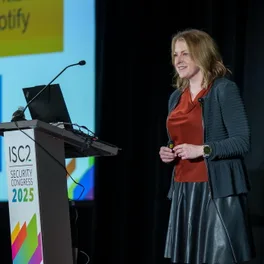
The short version: I built a real-time deepfake in 30 minutes using free AI tools and zero machine learning knowledge. The barrier to creating sophisticated attacks isn’t technical skill anymore; it’s just intent. Your fraud detection and identity verification processes need to assume video can be faked.
I just built a live deepfake demo for a tech event next week. Walk up to the camera, see yourself transformed into a celebrity in real-time. The face automatically rotates through different famous people every 15 seconds.
Time to build: 30 minutes. Cost: $0. Everything open source. Difficulty: I asked an AI to do it for me.
That’s not the scary part.
What I Actually Built
Here’s what happened in half an hour:
I downloaded Deep-Live-Cam from GitHub and told Claude Code (an AI coding assistant) to build it for my MacBook and create a live face-swapping demo that rotates through a set of celebrity images automatically. It downloaded and installed dependencies, set up auto-rotating celebrity faces, configured multi-person face swapping, and built a clean display output.
I grabbed 10 celebrity photos from public sources.
Total hands-on time: Maybe 10 minutes. The AI did the rest.
The result? Real-time face swapping at 15-30 FPS. Multiple people simultaneously. Minimal lag. Runs on consumer hardware.
I didn’t write a single line of code. I didn’t troubleshoot installation issues. I didn’t debug anything.
I just described what I wanted and watched it happen.
The Part That Keeps Me Up At Night
Building the demo was trivial. But what actually scares me isn’t that deepfake tech is easy.
It’s that I didn’t need to know how it works.
I’m a cybersecurity professional with 20+ years of experience. I understand systems, vulnerabilities, attack vectors. But I had very little knowledge of machine learning, computer vision, or how deepfake models actually function.
Didn’t matter. The AI handled everything.
That means the barrier to creating convincing live deepfakes isn’t technical skill anymore. It’s not even following installation instructions.
It’s being able to describe what you want.
And here’s what that eliminates: time.
Previous deepfakes took hours or days to create. That gave platforms time to detect them. Security teams time to respond. Fact-checkers time to verify. There was a window.
Live deepfakes close that window.
Let me show you what I mean with a scenario that’s now stupidly easy to execute.
The CFO Gets a Video Call
Your CFO receives a video call from your CEO. She needs an urgent wire transfer, vendor payment, acquisition deposit, whatever. The deadline is in two hours.
The face matches perfectly. The voice (using readily available voice cloning) sounds exactly right. The mannerisms are spot-on. The call appears to come from the CEO’s known device.
Cost to execute this attack: $0
Technical skill required: None. Just describe what you want to an AI.
Setup time: 30 minutes
Success rate: Terrifyingly high
This isn’t theoretical. A Hong Kong company lost $25 million to exactly this type of attack in 2024. The CFO attended a video conference call with multiple “colleagues”, and they were all deepfakes.
Here’s what made it work: urgency plus trust. The CFO saw familiar faces, heard familiar voices, and felt time pressure. Normal verification steps felt like they’d slow things down, maybe cost the company a critical deal.
That’s the attack vector. Not the technology, the psychology combined with real-time execution.
The Five-Minute Test
Want to know if you’re vulnerable? Ask yourself: could someone with your face photo and 30 minutes convince your CFO to wire money? Your IT team to grant access? Your family to share account details?
If your answer involves “but they’d never fall for that,” you’re vulnerable.
If your answer is “we have procedures,” ask when those procedures were last tested against a live video deepfake. Because I’m guessing the answer is never.
What Actually Works
Forget the long security checklists. Here’s what matters:
1. Safe words for high-stakes requests
Family level: One word that only real family members know. Never share it digitally. Change it quarterly.
Business level: Verification phrases for any request over your threshold (pick a dollar amount that would hurt). Store them offline.
The protocol is simple:
- Video call requests money/access/information
- You: “What’s the verification word?”
- Them: Correct answer or immediate red flag
2. Out-of-band verification
Any important video call request gets verified through a different channel:
- End the call
- Call back using a known number (not one they just gave you)
- Confirm using safe word
- Document everything
Yes, this adds friction. That friction is the point.
3. Time delays on urgent requests
Nothing legitimate requires bypassing verification because of urgency. Nothing.
If a request comes with pressure to skip normal security steps, that’s not efficiency. That’s a tactic.
Add a 30-minute mandatory delay for high-value transactions. If it’s real, 30 minutes won’t matter. If it’s fraud, 30 minutes might save you.
4. Train people to verify without embarrassment
The biggest barrier isn’t technology. It’s social pressure.
“I don’t want to insult the CEO by asking for verification.”
“Everyone will think I’m paranoid.”
“What if I’m wrong and I slow down an important deal?”
Make verification normal. Make it mandatory. Make it routine enough that nobody feels awkward doing it.
The Uncomfortable Truth
I built that conference demo as an educational tool. Show people how easy this is so they’d understand the risk.
But here’s what bothers me: I didn’t need to understand the technology at all. An AI built it for me in 30 minutes.
The same AI tools are available to everyone. The exact same code, same models, same process could be used maliciously right now.
The only difference between my conference demo and actual fraud is intent and a 30-minute conversation with an AI.
You can’t un-invent this technology. It’s open source, freely available, and AI tools are making it accessible to literally anyone who can type a sentence.
The barrier to entry isn’t technical skill or expensive equipment anymore.
It’s just whether someone decides to ask.
What This Means for You
We’re at an inflection point. Deepfake technology just crossed the threshold where it’s good enough to be dangerous but still new enough that most people don’t have defenses.
That window is closing fast.
Five years from now, we’ll either have normalized verification procedures and everyone will understand that video calls aren’t automatically trustworthy, or we’ll be reading about massive fraud losses and wondering why nobody saw it coming.
You don’t need to become a security expert. You need to do three things:
- Create safe words today, personal and professional
- Implement out-of-band verification for anything that matters
- Practice verification even when it feels awkward
Start with your finance team. Then your family. Then anyone who has access to money or sensitive information.
Because right now, the easiest attack vector isn’t exploiting software vulnerabilities or social engineering over email.
It’s showing up on a video call as someone you trust and asking nicely.
And thanks to 30 minutes with an AI coding assistant, literally anyone can pull that off.
Need help protecting your organization from AI-enabled fraud? Virtual CISO services provide the strategic leadership to implement verification protocols, train teams on emerging threats, and build defenses against deepfake attacks before they cost you millions.
Book a free consultation to discuss deepfake defense strategies.
Connect with me on LinkedIn for more insights on AI security threats.